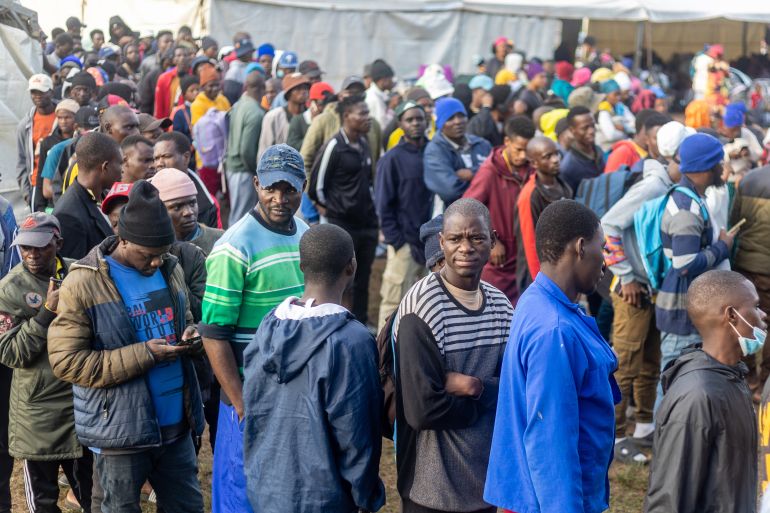

The Malawi Government has made a public request for financial support in its effort to repatriate its citizens from South Africa amid the continued attacks on black foreigners in the country.
Malawi revealed that there are about 10,000 Malawian nationals in South Africa. Per the statement, the Malawians are among other black Africans experiencing distress following vigilante attacks in the country.
The government stated that it has already taken significant measures to support its citizens. These include deploying a government task force, issuing emergency travel documents, and repatriating the first group of returnees.
The Malawian government added that it is also arranging transport for vulnerable Malawians and establishing reception and processing facilities. The efforts also include providing shelter, food, psychosocial support, and onward transportation.
However, the scale of the operation has created significant financial, logistical and humanitarian demands.
Consequently, the Malawian government is requesting support from development partners, private-sector organizations, humanitarian agencies, faith-based groups, individuals and transport operators.
The statement features a bank account detail for a donation which Malawi says will be managed transparently for repatriation.
The Malawian Government’s request for donation follows its first batch of citizen repatriation. The move also comes as African nationals struggle to meet the unofficial June 30 deadline announced by anti-foreigner vigilantes.
Several African countries including Nigeria, Ghana, and others have already begun evacuating their citizens. But these efforts have proven insufficient at addressing the continued attacks on African nationals still in the country.
Meanwhile, South African authorities revealed that the actions have already begun impacting their citizens in other African nations.