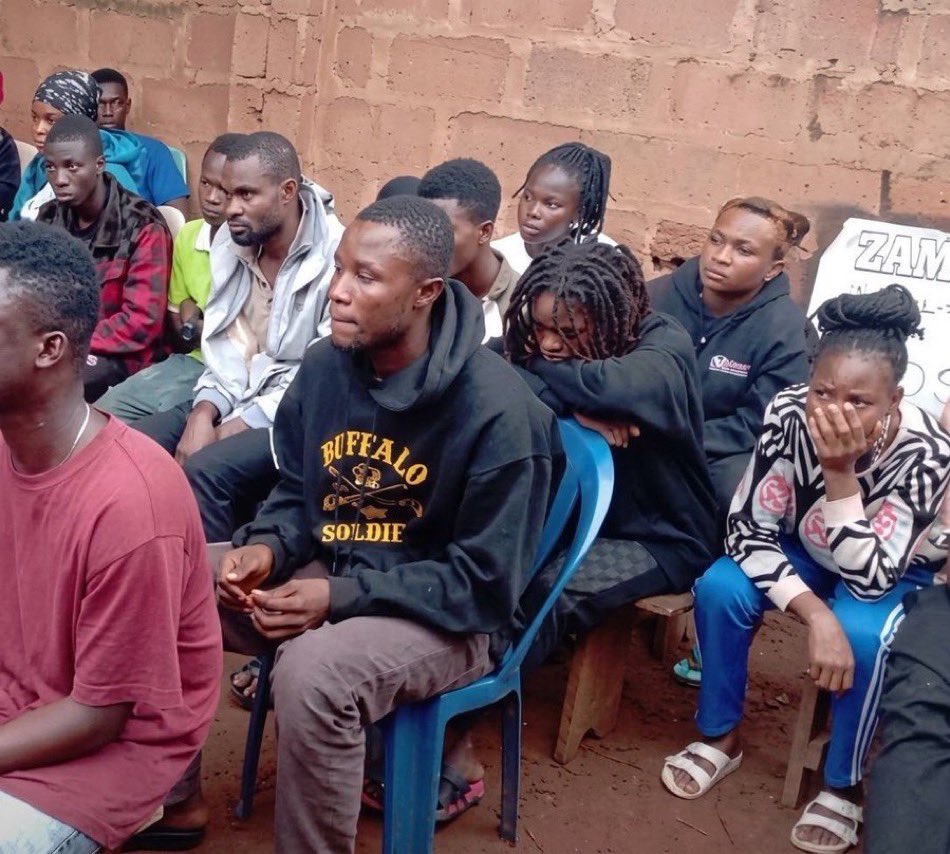

Thirty-three Ghanaians including 12 women, have reportedly been found at a camp in Anyigba, Dekina Local Government Area of Kogi State, amid claims that they were lured to Nigeria with promises of travelling to the United Kingdom.
The group was reportedly intercepted during an operation by a special team from Ghana after relatives raised concerns over repeated requests for additional money from some of those who had travelled to Nigeria.
According to reports, some of the Ghanaians had sold businesses and parted with significant amounts of money after being led to believe that their stay in Nigeria was connected to arrangements to travel to the UK or elsewhere in Europe.
Some reportedly paid GH¢300,000
Some members of the group reportedly claimed they had paid as much as GH¢300,000, equivalent to about ₦34.27 million, in the hope of travelling to the United Kingdom.
The Ghanaians were reportedly staying at one of several camps in the Anyigba area.
Read also: FG Seeks Fresh $1.5bn World Bank Loan As Debt Hits N166.79tn
Concerns reportedly intensified after relatives noticed that some of those who had travelled to Nigeria continued asking for more money without making progress on their supposed journey abroad.
Ghanaians deny illegal migration claims
However, those found at the camp reportedly denied that they had been brought to Nigeria as part of an illegal migration arrangement.
Some reportedly told those investigating the matter that they had travelled to Nigeria to participate in network marketing.
This has left questions surrounding the actual purpose of the camp, the people behind the recruitment and the circumstances under which the Ghanaians were brought into Nigeria.
Reports said the circumstances surrounding their travel and activities at the camp remain under investigation.
Case raises fresh concerns over travel scams
The development has renewed concerns over schemes that allegedly target people seeking opportunities to travel abroad, particularly where prospective migrants are asked to pay large sums of money upfront.
The case also comes amid warnings from Ghanaian authorities about deceptive travel and employment schemes and the need for prospective travellers to verify recruitment agencies and overseas opportunities through official channels.