
Nigeria’s procurement process for six new satellites has reached 95 per cent completion, bringing the country closer to signing final contracts for their manufacture and deployment.
The Director-General of the National Space Research and Development Agency (NASRDA), Prof. Matthew Adepoju, disclosed this in Abuja, adding that the $2 billion programme, approved by President Bola Tinubu’s administration, aims to modernise Nigeria’s space infrastructure and replace ageing satellite assets.
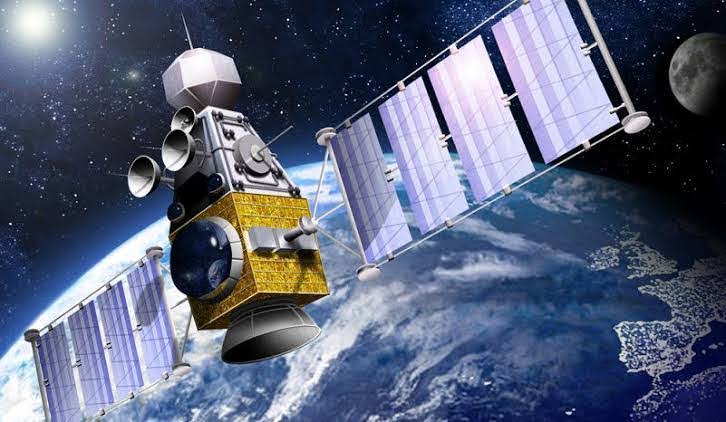
According to him, the planned constellation will comprise six full-sized satellites designed for communication and Earth-observation purposes. The fleet will include three optical Earth-observation satellites with sub-metre high-resolution imaging capabilities.
Another satellite will use Synthetic Aperture Radar (SAR) technology, with one-metre and sub-metre resolution and the ability to capture images during both day and night. While the remaining two satellites, designated NigComSat-2A and NigComSat-2B, will provide communication services.
The project will involve several international aerospace companies.
Thales Alenia Space of France and Israel Aerospace Industries (IAI) are partnering to deliver the communication satellites, while China Great Wall Industry Corporation (CGWIC) is also part of the consortium.
NASRDA expects the technical facilities required for the programme to be completed and commissioned within 18 months after the final contracts are signed.
Satellites to Support Security, Agriculture
However, the new satellite infrastructure is expected to support Nigeria’s broader economic and development objectives, including the government’s ambition to build a $1 trillion economy.
The Earth-observation and radar capabilities are expected to strengthen security by providing high-resolution and day-and-night imagery for monitoring criminal activities, securing borders and improving maritime surveillance.
The satellites will also provide data for precision agriculture, supporting efforts to improve crop yields and strengthen food security.
Furthermore, the infrastructure is expected to support regulatory activities in Nigeria’s space sector, including spectrum management and monitoring of licensed domestic space activities.
By Musekir Faisat Omolara