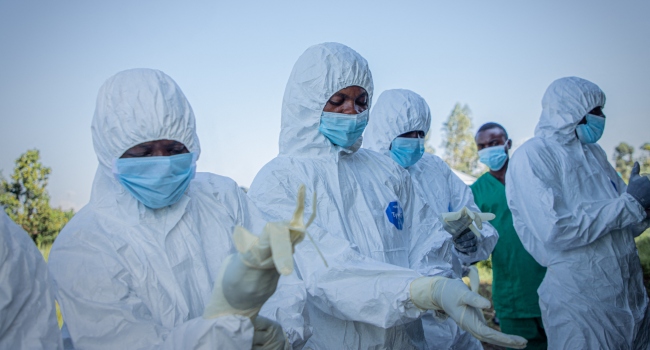

The Nigeria Centre for Disease Control and Prevention (NCDC) has reported two new suspected Ebola cases and increased contact tracing to 53 people following Nigeria’s first confirmed infection in the Federal Capital Territory (FCT).
NCDC Director-General, Dr Jide Idris, disclosed this on Sunday during a press briefing in Abuja, saying investigations had identified additional individuals who might have come into contact with the infected patient.
According to the agency, one of the new suspected cases is in the FCT, while the other is in Rivers State. The Rivers State case has tested negative for the virus.
However, the number of primary contacts under surveillance has risen from 44 to 53 following an expanded investigation into the patient’s earlier visits to healthcare facilities.
The contacts include 44 healthcare workers from the primary hospital, three workers at Julius Berger Clinic, three household members and three medical sample collectors. The household contacts comprise the patient’s husband, chef and driver.
Health officials are monitoring the 53 individuals throughout the 21-day incubation period. As of Sunday’s briefing, none of the contacts had tested positive for Ebola or developed symptoms.
The index patient is a 42-year-old Ugandan-born female diplomat married to a Swiss diplomat. She arrived in Abuja from Uganda through Addis Ababa on October 3, 2026.
She reportedly developed malaria-like symptoms on October 7 and sought medical attention on October 11 before testing positive for the Bundibugyo strain of Ebola on October 20.
Genomic sequencing suggests that she might have encountered an infected individual at an airport. The individual later died in Kenya, according to reports on the investigation. Nigeria is among the countries affected by a multi-country outbreak of the Bundibugyo strain, which originated in the Democratic Republic of the Congo in May 2026.
NCDC Issues Public Health Advisory
Despite the confirmed infection and ongoing investigations, the NCDC maintains that Nigeria has not experienced a widespread Ebola outbreak.
The agency has urged Nigerians to remain calm, wash their hands regularly with soap and water, and avoid contact with the blood and other bodily fluids of people suspected of having the infection.
It also advised the public to avoid contact with wild animals, refrain from consuming bushmeat and ensure meat is thoroughly cooked.
Anyone who develops symptoms such as sudden fever, severe headache, muscle pain, vomiting or diarrhoea after international travel should seek immediate guidance from health authorities.
The NCDC has asked members of the public to contact its toll-free line on 6232 or their State Ministry of Health for assistance.
By Musekir Faisat Omolara