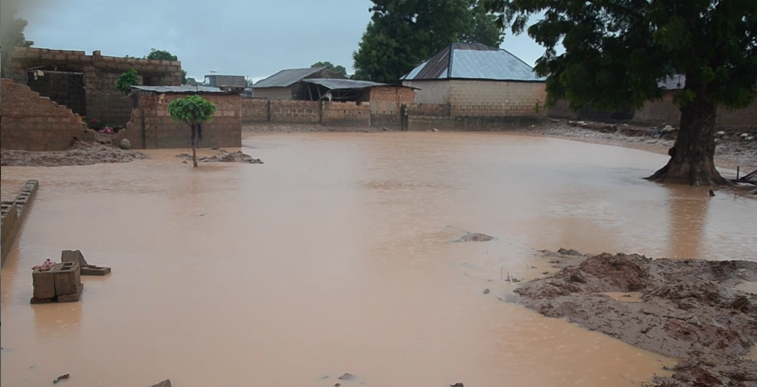

The Nigeria Hydrological Services Agency (NIHSA) has warned that 14 states across the country may experience moderate flooding between July 14 and July 20, urging residents and authorities to take proactive steps to reduce the impact of possible flood incidents.
According to the agency’s Director-General, Umar Mohammed, the advisory is based on NIHSA’s latest hydrological outlook, which indicates an increased likelihood of localized flooding along major river channels during the forecast period.
List of States affected
The affected states include Adamawa, Akwa Ibom, Anambra, Bauchi, Benue, Borno, Cross River, Edo, Enugu, Imo, Kaduna, Lagos, Niger, and Plateau.
Mohammed disclosed that 16 hydrological monitoring stations have been identified as high-risk locations, with several communities, schools, healthcare facilities, markets, and other public infrastructure potentially vulnerable if adequate preventive measures are not taken.
“The forecast indicates the likelihood of localized flooding along major river channels, with 16 hydrological monitoring stations identified as high-risk locations during the period,” Mohammed stated.
He explained that the Annual Flood Outlook (AFO) serves as a key tool for predicting flood patterns and supporting disaster preparedness, emergency response, and risk reduction efforts nationwide.
Among the critical locations highlighted in the advisory are Saminaka on the Karam River, the Waya Dam site on the Waya River, and Amber on the Amber River, all of which are considered vulnerable to rising water levels.
“The Annual Flood Outlook provides flood predictions and analyses of possible flood scenarios across the country during the rainy season,” the NIHSA boss noted.
The agency urged state governments, emergency management agencies, and local communities to strengthen early warning systems, activate evacuation plans, intensify public awareness campaigns, and pre-position relief materials in flood-prone areas.
Residents living in vulnerable communities were also advised to relocate to safer locations where necessary, clear blocked drainage channels, avoid driving or walking through flooded roads, and regularly monitor official flood forecasts.
“Residents in flood-prone communities should relocate to safer areas where necessary, clear drainage channels, avoid crossing flooded roads, and stay updated with NIHSA’s flood forecasts,” Mohammed advised.