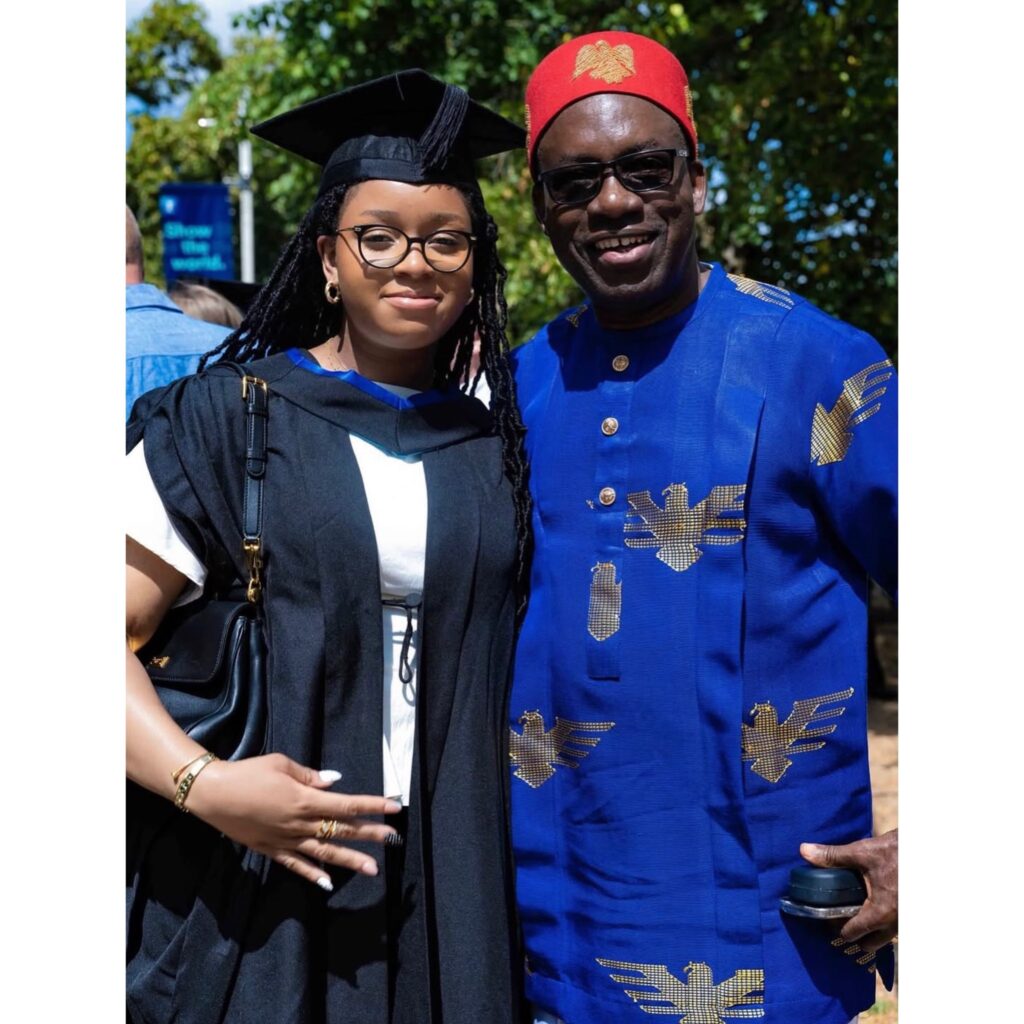

Anambra State Governor, Prof. Chukwuma Soludo, has come under public scrutiny after celebrating his daughter, Oduko Soludo, for earning a First-Class Honours degree, just days after his administration banned graduation ceremonies for basic and secondary schools across the state.
The state government’s directive prohibits graduation and transition ceremonies for kindergarten, primary, and junior secondary schools in both public and private institutions. According to the government, the measure seeks to ease the financial burden on parents by eliminating compulsory expenses associated with graduation expenses for elaborate celebrations of routine class promotions.
While the policy does not affect university graduation ceremonies, Soludo’s public celebration of his daughter’s academic achievement quickly ignited debate on social media.
Following the circulation of photos and congratulatory messages from the family’s attendance at Oduko’s graduation ceremony, Nigerians contrast the governor’s stance on local school celebrations with the high-profile celebration of his daughter’s overseas university education.
Critics argued that the development highlighted a disconnect between government policies affecting ordinary citizens and the personal choices of political leaders, particularly regarding educating their children abroad.
However, others defended the governor, stressing that the ban targets costly graduation ceremonies for nursery, primary, and junior secondary schools rather than university graduations. They maintained that celebrating a first-class university degree is fundamentally different from discouraging expensive ceremonies for pupils advancing through basic education.
The controversy has since broadened into a wider conversation about the quality of Nigeria’s education system. Raising concerns on the growing trend of public officials sending their children to foreign universities including whether leaders should rely more on local educational institutions while implementing policies that affect citizens at home.
By Musekir Faisat Omolara