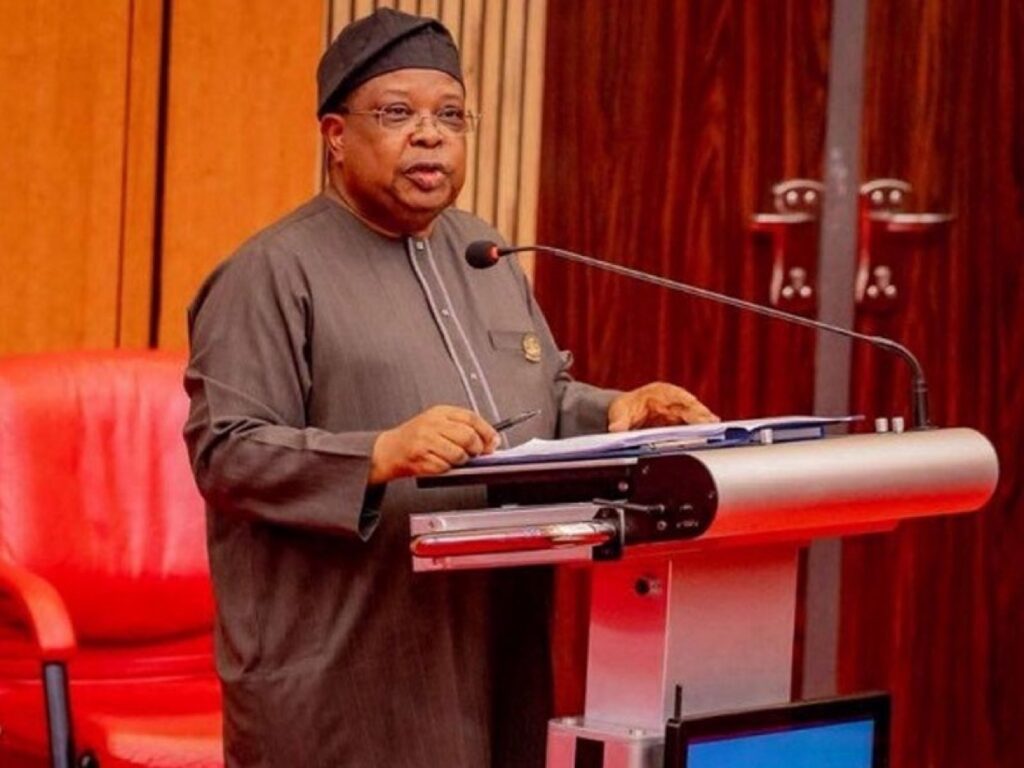

The Federal Government can no longer continue to cover electricity tariff shortfalls while promising to provide power to every Nigerian, Minister of Power Joseph Tegbe has said, signalling a push for major changes to the country’s electricity market.
Tegbe spoke at an energy conference organised by the Harvard Business School Association of Nigeria in Lagos, where he said the current system was financially unsustainable because electricity operators often struggled to recover the cost of the power supplied.
“We can’t keep covering tariff shortfalls and think we’ll give power to every Nigerian,” the minister said.
He said the government was reviewing the structure of the electricity market, including tariff assumptions and the role of the Nigerian Bulk Electricity Trading (NBET) Plc, as part of efforts to address persistent funding challenges.
FG Eyes Shift To Bilateral Electricity Deals
Tegbe said the government planned to move away from the existing bulk electricity trading arrangement towards greater use of bilateral agreements, under which power producers supply electricity to distribution companies or customers based on agreed commercial terms.
He argued that the approach could improve payment discipline and reduce the sector’s dependence on government funding.
The minister cited Mainstream Energy Solutions as an example, saying the company supplies electricity to the Abuja and Ikeja distribution companies, which pay for the power they receive.
“Mainstream will supply you what you pay for,” he said.
Tegbe also questioned the continued operation of NBET under its current model, which involves purchasing electricity in bulk from generation companies and selling it to distribution companies.
He said the government intended to move away from the arrangement, arguing that it had not delivered the financial sustainability needed by the sector.
Metering Gap, Revenue Losses Worsen Crisis
The minister identified poor revenue collection, inadequate metering and accumulated debts to power generation companies as major obstacles to reliable electricity supply.
According to Tegbe, Nigeria has a metering gap of about 40 per cent, making it difficult to accurately measure electricity consumption and ensure that consumers are billed appropriately.
He said the government had deployed more than 700,000 meters nationwide in the preceding six months and planned to install 7.5 million meters over the next two to three years.
Read also: Nigeria, Seven West African Countries Agree To Strengthen Border Security
Tegbe also put aggregate technical, commercial and collection losses across the electricity value chain at more than 44 per cent, saying the losses had contributed to the sector’s financial difficulties.
He estimated outstanding legacy debts owed to generation companies at about ₦3.3 trillion.
The government, he said, had paid between ₦1.2 trillion and ₦1.3 trillion through a bond-backed debt settlement initiative and planned to complete the payments by 2027.
However, he stressed that settling old debts alone would not solve the problem unless the government also prevented new arrears from accumulating.
Government Targets Stranded Power Generation
Tegbe said the government was also considering independent transmission lines to connect underutilised power plants to industrial clusters with high electricity demand.
He cited the Alaoji power plant in the Niger Delta, saying facilities in the area had the capacity to generate a combined 3,000 megawatts but were producing only about 400 megawatts.
He added that the government was reviewing transmission infrastructure and conducting technical assessments to identify where investments could deliver the greatest improvements.
The reforms are intended to address challenges across the electricity value chain, including gas supply, generation, transmission, distribution and market financing.
Experts Warn Of Wider Gas Supply Implications
Energy expert Gbite Adeniji said resolving the electricity sector’s financial crisis would require the government to clear outstanding debts and provide NBET with a credible financial foundation.
He noted that delayed payments to gas suppliers were affecting the supply of gas to power plants, undermining electricity generation.
Adeniji also called for closer scrutiny of gas production and procurement costs, warning that inefficiencies could ultimately be passed on to electricity consumers through pricing arrangements.
Meanwhile, the Chief Executive of the Nigerian Upstream Petroleum Regulatory Commission, Oritsemeyiwa Eyesan, said debt-resolution measures and the completion of major gas infrastructure were important to improving supply across the country.
She highlighted the completion of the OB3 gas pipeline, which connects gas supply routes from southern Nigeria towards the north, as a significant development for the sector.
The Federal Government’s proposed shift towards more commercially driven electricity arrangements comes as millions of households and businesses continue to contend with unreliable power supply.
Although Tegbe said the current funding model was unsustainable, the long-term effect of the proposed reforms on electricity bills and service delivery will depend on how the changes are implemented and how vulnerable consumers are protected.