
The Independent National Electoral Commission (INEC) has identified 268 questionable entries in its preliminary Register of Voters following the discovery of suspected artificial intelligence-generated photographs and other registration irregularities.
The commission’s Director of Information and Communication Technology, Dr Lawrence Bayode, disclosed this during an appearance on Channels Television’s Sunday Politics, explaining that its Automated Biometric Identification System (ABIS) had flagged the affected records for further investigation.
Bayode said the commission had commenced a review of the entries to determine the nature of the irregularities and remove records containing artificially generated photographs.
He attributed some of the problems to alleged misconduct by registration officers who had access to the commission’s registration platform and reportedly used their official login credentials to introduce questionable information.
The ICT director also raised concerns about the alleged misuse of a special registration arrangement designed to accommodate persons with disabilities who have incomplete fingers or no fingers.
However, Bayode clarified that INEC would not automatically disqualify voters whose genuine photographs had undergone enhancement through artificial intelligence applications.
He explained that the commission would distinguish between authentic photographs improved with AI tools and images created entirely through artificial intelligence, adding that only the latter would be removed.
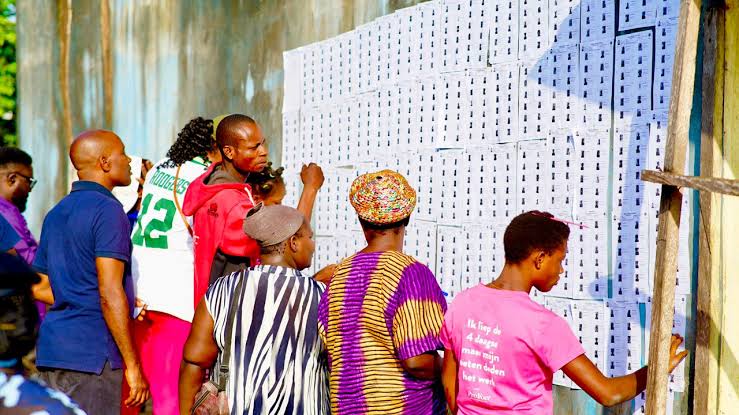
The development follows public criticism that greeted the publication of INEC’s preliminary voter register online on October 26, after Nigerians spotted suspicious photographs and other questionable entries.
The concerns also included reports of duplicate registrations, names of deceased persons and complaints from some registered voters who could not find their details.
INEC has maintained that the published register remains preliminary and is subject to corrections through its verification and data-cleanup procedures.
The commission is expected to complete the exercise and certify the final Register of Voters on December 15, 2026, ahead of the 2027 general elections.
By Musekir Faisat Omolara