
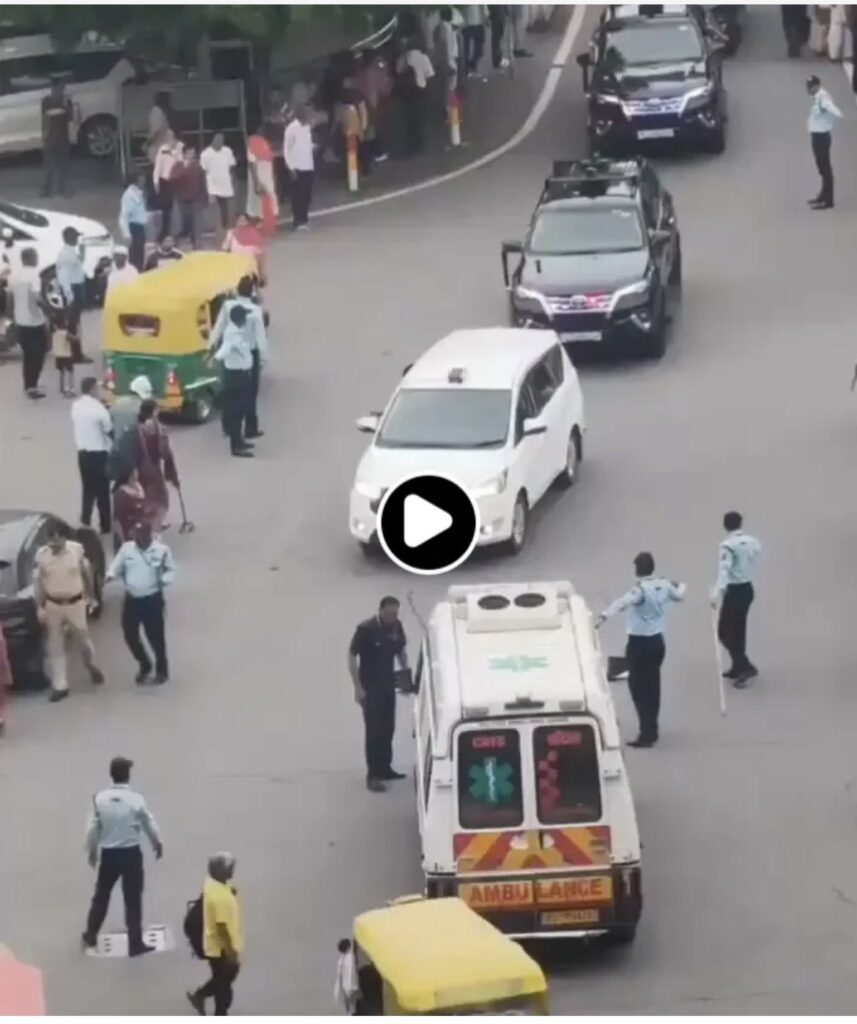

Widespread outrage has erupted in India after a 42-year-old critically ill patient died after his ambulance was stopped by police to allow Assam Chief Minister Himanta Biswa Sarma’s convoy to pass.
The patient, identified as Rasuraj Chakraborty, was being rushed to Silchar Medical College and Hospital in Assam for treatment of an advanced liver ailment when the incident occurred at the Ramnagar ISBT junction in Silchar.
Video footage circulating online showed traffic police stopping vehicles as the VIP convoy approached, with the ambulance reportedly among those held back.
While reports from the patient’s family and other accounts suggested that the ambulance was delayed for a significant period, Sarma said the vehicle was stopped for only about 30 seconds.
Chakraborty was eventually taken to the hospital but died the following morning.
The incident triggered widespread criticism, particularly over India’s longstanding VIP convoy culture and the practice of stopping traffic to facilitate the movement of political officials.
Assam CM Apologises, Four Police Officers Suspended
Responding to the backlash, Sarma apologised publicly and described the decision to stop the ambulance as unacceptable. He said no official convoy should take precedence over a person requiring urgent medical attention.
Four police personnel involved in managing traffic during the incident were subsequently suspended, while authorities ordered a departmental inquiry into the circumstances surrounding the stoppage.
However, the circumstances surrounding Chakraborty’s death have also generated controversy. Although the ambulance delay occurred shortly before his death, Sarma and a member of the patient’s family acknowledged that Chakraborty had been critically ill and maintained that his underlying medical condition was a major factor.
The Assam government has meanwhile directed district and police authorities to ensure that emergency medical vehicles are not obstructed during the movement of the Chief Minister or other official convoys.
The incident has continued to fuel debate over the balance between security arrangements for public officials and the need to protect the right of critically ill patients to receive urgent medical care.
By Musekir Faisat Omolara