
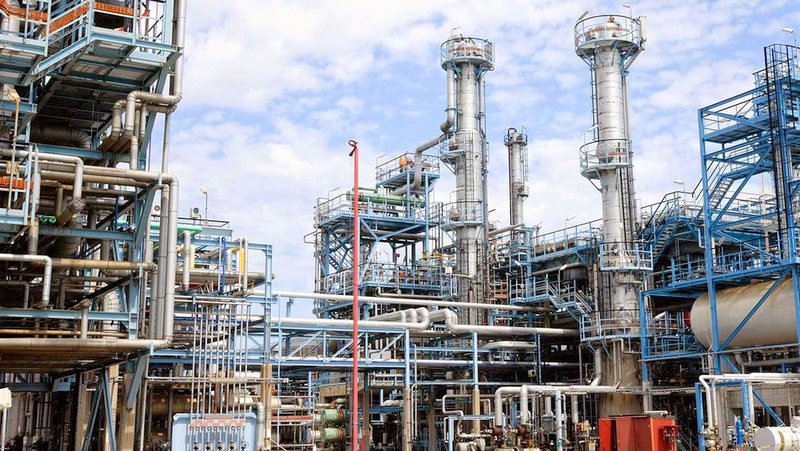

Refinery — Support staff of the Port Harcourt Refining Company have issued a 48-hour ultimatum to the management of the Nigerian National Petroleum Company Limited over seven months of unpaid salaries and the alleged delay in implementing a newly approved salary structure.
The workers, under the PHRC Support Staff Union, warned that they would shut down the refinery completely if their demands were not addressed within the ultimatum.
The protest took place on Monday at the refinery in Eleme, Rivers State, where the workers barricaded the entrance, erected tents and displayed placards demanding improved welfare and payment of their outstanding entitlements.
Workers Demand Immediate Salary Implementation
The workers alleged that the NNPCL Group Chief Executive Officer, Bayo Ojulari, had approved a new salary structure for them, with an effective date of October 1, 2026.
According to the union, however, the Refinery Coordinator had failed to implement the approved structure, with the workers alleging that they had instead been asked to wait until January 2027.
The protesters rejected the proposed delay, insisting that the approved remuneration should take effect immediately.
Among their demands is the implementation of the new salary structure and remuneration package in line with the approval and effective date.
Seven Months’ Salaries Still Outstanding
The workers also demanded the immediate payment of seven months of outstanding salaries and other legitimate entitlements allegedly owed to affected support staff.
They further requested a ₦1 million housing or rent relief for eligible workers to help ease their accommodation challenges.
Another demand was improved consultation between the Refinery Coordinator, managing directors, other relevant management authorities and recognised labour representatives on issues affecting workers’ welfare.
Placards displayed during the protest included messages such as, “No more empty promises, January 2027 is too far to implement new salary structure,” and “Workers deserve dignity: Fair pay is our right.”
Some protesters also called for the removal of the Refinery Coordinator.
‘We Will Shut Down The Refinery’
Speaking during the protest, the Chairman of the PHRC Support Staff Union, Bennett Isy, said the workers would not back down until their demands were addressed.
Isy questioned why an approval by the NNPCL GCEO could allegedly be delayed at the refinery level.
He appealed to President Bola Tinubu to intervene, while warning that the workers would block access to the facility if the salary structure was not implemented within 48 hours.
“We are saying that we are not backing down. We are following all due process to ensure that what rightly belongs to us gets to us; but if it is not implemented in the next 48 hours, to God, we are going to shut down this refinery,” Isy said.
Workers Raise Safety, Medical Concerns
Beyond their salary demands, some of the protesters raised concerns about working conditions and access to medical care.
Read also: Galadima Alleges Opposition Candidates Offered Millions To Quit 2027 Race
A female support staff member, Joy Osueiya, alleged that some workers had suffered serious health consequences and injuries while working at the refinery.
She also claimed that some colleagues had lost their lives and that workers had been affected by what she described as hazardous conditions at the facility.
Another worker, Godspower Nwakanji, appealed to the President to intervene, saying the workers were struggling with hunger, poverty and inadequate medical support.
“We cannot renew our hope in hunger and poverty. We cannot renew our hope when there is no medical attention,” Nwakanji said.
Management Yet To Respond
The workers’ allegations and ultimatum had not been accompanied by a public response from the NNPCL or the Refinery Coordinator in the reports reviewed.
The planned shutdown would potentially disrupt activities at the Port Harcourt refinery if the dispute remains unresolved after the 48-hour deadline.
The workers, however, said they were pursuing the matter through due process while insisting that the approved salary structure, outstanding wages and other welfare demands must be addressed.