
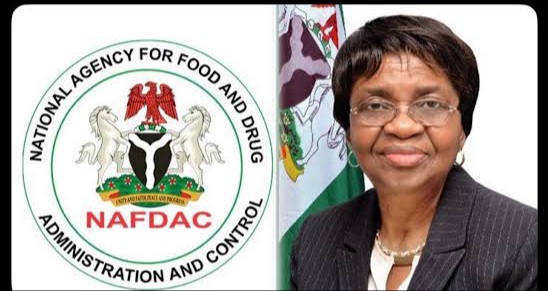

The Director-General of the National Agency for Food and Drug Administration and Control (NAFDAC), Prof. Mojisola Adeyeye, has criticised what she described as widespread public ignorance about the responsibilities of agencies involved in food safety in Nigeria.
Adeyeye made the remarks in a video shared online by BusinessDay TV on Sunday while explaining NAFDAC’s regulatory responsibilities across the food value chain and responding to concerns about the agency’s role in food safety.
“We are ignorant in this country, we are very ignorant. We don’t read. We don’t understand,” she said.
According to the NAFDAC DG, several government agencies are responsible for different stages of food production, from the farm to the consumer, noting that NAFDAC’s mandate largely covers processed and semi-processed foods.
“There are many organizations. There are many agencies that are involved from farm to fork,” she said.
Adeyeye explained that NAFDAC does not regulate fresh produce such as oranges sold directly in markets, stressing that such responsibilities primarily fall under the Ministry of Agriculture.
“NAFDAC mandate is for processed or semi-processed foods. So the oranges you buy in the market, we don’t control the oranges you buy in the market,” she said.
She, however, noted that NAFDAC becomes involved where pesticides are concerned because the agency regulates such products and is responsible for educating farmers on their proper use.
“However, if somebody puts pesticides on that orange, we have to train the farmer,” Adeyeye said, adding that NAFDAC collaborates with the Ministry of Agriculture to educate farmers on the appropriate application of pesticides.
The NAFDAC boss attributed some challenges in pesticide use to illiteracy, saying some farmers may have difficulty understanding instructions provided on product labels.
“We have about 56 percent illiteracy,” she said.
Adeyeye explained that a lack of understanding could sometimes lead to the misuse of agricultural chemicals, with some people believing that applying more of a product would produce better results.
“Sometimes our people don’t understand, and they think the more you put, the better,” she said.
She acknowledged, however, that NAFDAC has limitations in reaching every farmer across the country, given the large number of farmers involved in agricultural production.
“We cannot go to one million farmers in Nigeria. I don’t know how many millions we have. NAFDAC cannot do that,” she said.
Adeyeye maintained that while the Ministry of Agriculture has primary responsibility for fresh produce, NAFDAC still has a role to play in farmer education because of its regulatory responsibility over pesticides.
Her comments come amid discussions about food safety in Nigeria and calls for clearer understanding of the roles played by different government agencies in protecting consumers across the food supply chain.