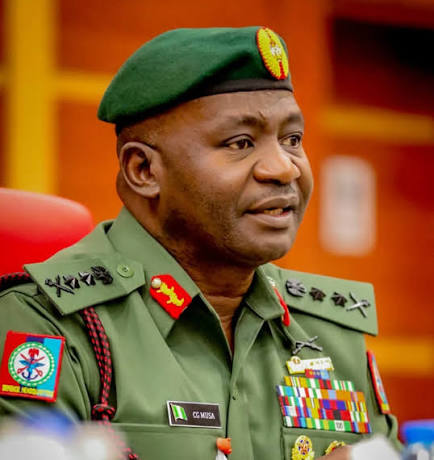

Chief of Defence Staff, Gen. Christopher Musa, has urged Nigerians to appreciate the sacrifices and difficult conditions faced by military personnel in the course of protecting the country.
The Defence Chief made the remarks during an interview with Ken Giami on the Leadership Podcast, where he advocated military training for Nigerians, saying it would help them better appreciate the discipline, resilience and challenges involved in military service.
He said the hunger, exhaustion and physical strain associated with military training offer participants a perspective on life that cannot easily be gained elsewhere.
Musa described situations where soldiers are required to walk for kilometres while exhausted, hungry and thirsty, noting that pushing through such extreme physical conditions is where true endurance is developed.
According to him, military personnel routinely endure difficult conditions as part of the sacrifices required to protect Nigerians and safeguard the nation.
Musa likened the sacrifices made by soldiers to the biblical teaching that there is no greater act of friendship than giving one’s life for another person, stressing that military personnel put their lives at risk to keep the country secure.
He also expressed concern over instances where members of the public insult military personnel or suggest that the security challenges confronting the country should continue.
The Defence Chief maintained that soldiers themselves want an end to insecurity and desire a return to peace, noting that military personnel are also Nigerians affected by the country’s security situation.
Musa further highlighted the personal sacrifices of personnel deployed for security operations, noting that they are fathers, mothers, brothers, sisters and members of families who leave their loved ones behind to serve in difficult and dangerous conditions.
By Musekir Faisat Omolara