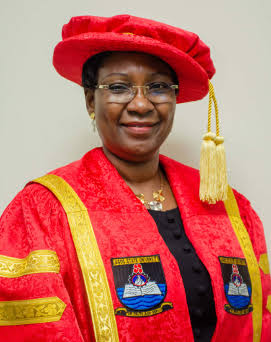

The immediate past Vice-Chancellor of Lagos State University (LASU), Professor Ibiyemi Olatunji-Bello, has said public universities in Nigeria should charge at least ₦1 million annually per student to achieve financial sustainability and independence.
Professor Ibiyemi made the remarks in a recent interview with Punch following the completion of her five-year tenure as the ninth Vice-Chancellor of LASU on Saturday, September 19, 2026, where she discussed her administration’s achievements, challenges, unfinished projects and the university’s future.
She said the rising cost of running universities, particularly salaries, electricity and other overhead expenses, had made it increasingly difficult for institutions to depend solely on government funding and existing internally generated revenue (IGR). According to her, LASU’s monthly payroll currently exceeds ₦1 billion, while its IGR, despite increasing significantly during her tenure, remains insufficient to meet its salary obligations.
She further disclosed that the university’s IGR grew from about ₦3 billion to ₦13 billion during her administration, but said the increase was still not enough to cover the institution’s basic financial commitments.
Ibiyemi argued that universities seeking financial self-sustainability would need to significantly increase their tuition fees, noting that some secondary schools already charge more than ₦1 million per term while some public universities collect around ₦100,000 annually.
She therefore said public universities seeking financial independence would need to charge not less than ₦1 million per student annually.
The former LASU VC also maintained that providing quality education requires substantial funding and urged parents to place greater priority on financing their children’s education.
“Good quality education needs money,” she said.
However, her comments came after the Minister of Education, Tunji Alausa, called on public universities to explore alternative sources of funding, arguing that government funding alone cannot adequately sustain tertiary institutions.
By Musekir Faisat Omolara