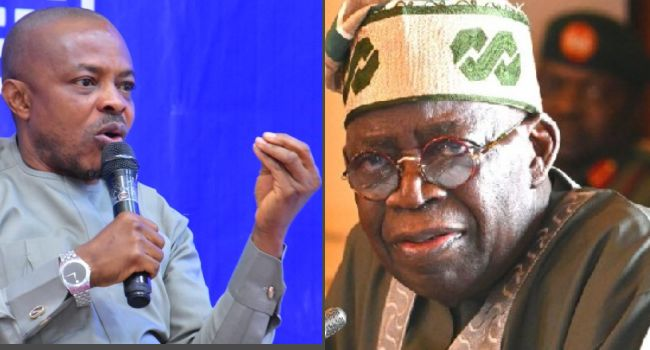

The Nigeria Labour Congress (NLC) has questioned the Federal Government’s decision to seek fresh external loans worth $20.5 billion and €1.45 billion, demanding an explanation for continued borrowing despite the removal of petrol subsidy.
NLC President, Joe Ajaero, raised the concerns on Thursday while speaking on Channels Television’s The Morning Brief, saying the basis for the proposed loans was unclear to the labour movement.
“If you come out to tell us that the subsidy is gone, that you are making more money and then you are giving more money to states, what is the justification for continually borrowing from the International Monetary Fund and the World Bank and other agencies when there is enough money?” Ajaero asked.
Ajaero Questions Borrowing Amid Rising Oil Prices
The labour leader argued that Nigeria’s growing debt profile was putting pressure on the country, questioning why the government would continue borrowing when crude oil prices had risen above the benchmark used for the 2026 budget.
He cited the impact of the Middle East conflict on oil prices, noting that the budget had been prepared with crude oil benchmarked at $70 per barrel.
“If the 2026 budget was prepared with crude oil price benchmarked at $70 per barrel and now sells above $100 per barrel due to the US-Iran crisis, should this country still be collecting loans?” he asked.
Ajaero also criticised international lenders, including the International Monetary Fund and the World Bank, arguing that their continued lending to Nigeria was not helping the country address its debt burden.
NLC Calls on National Assembly to Scrutinise Request
Ajaero clarified that the NLC does not approve government loans and does not determine when borrowed funds are released to the Federal Government.
He urged Nigerians and relevant institutions to demand answers about the new borrowing request, adding that the National Assembly could stop the process by rejecting it.
“If the National Assembly rejects the loan, the Federal Government will not get any loan,” he said.
Read also: UK Raises Student Visa Living Funds Requirement to £14,130
Nigeria’s Borrowing Plan Faces Renewed Criticism
The latest request has renewed debate over the Tinubu administration’s borrowing strategy and the country’s rising debt burden.
In April, the Federal Government increased its planned borrowing for 2026 by ₦11.31 trillion to ₦29.20 trillion. The government also projected a fiscal deficit of ₦31.46 trillion and debt-servicing costs of ₦15.81 trillion.
The continued reliance on loans has drawn criticism from political figures and other public voices, particularly after the removal of the petrol subsidy, which was expected to free up government resources for development.
In April, Peter Obi, presidential candidate of the Nigeria Democratic Congress, warned that the country was heading towards a debt crisis. He also raised concerns about outstanding payments to contractors and the implementation of capital projects.
Similarly, the Emir of Kano, Muhammadu Sanusi II, questioned why the government continued borrowing after ending fuel subsidy payments, arguing that Nigerians should see the benefits of the policy through improved public finances.
The Federal Government has defended its borrowing strategy, maintaining that the funds are intended to support critical infrastructure and other development priorities.