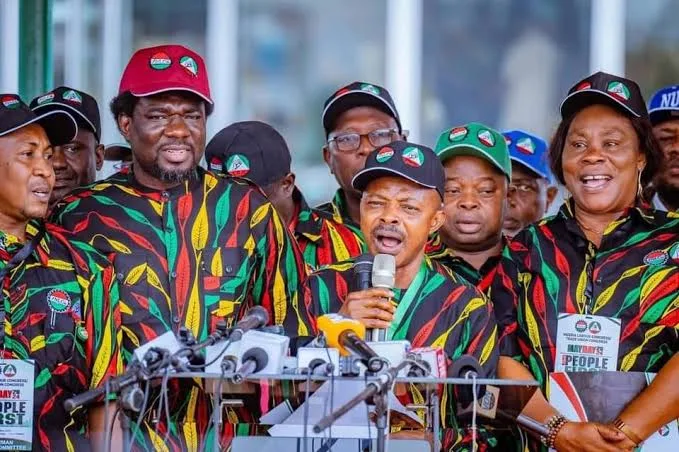

The Nigeria Labour Congress (NLC) has rejected the Federal Government’s position that negotiations for a new national minimum wage should wait until 2027, insisting that discussions must begin in October 2026 to prevent further delays and ease workers’ economic hardship.
In a letter to the Minister of Labour and Employment, Muhammad Dingyadi, NLC President Joe Ajaero argued that commencing negotiations now would not mean implementing a new wage before the legally prescribed review date.
The dispute follows the Federal Government’s position that the current ₦70,000 national minimum wage, signed into law by President Bola Tinubu in July 2024, is due for review on June 1, 2027.
The government has argued that reopening negotiations barely two years after implementation would be premature and could disrupt industrial relations.
NLC Faults Government’s Interpretation
The labour congress disagreed, saying early preparations were necessary to ensure that negotiations and the transition to a new wage structure were completed without unnecessary delays.
Ajaero said the government should begin the administrative process by inviting nominations from relevant stakeholders, inaugurating the National Minimum Wage Tripartite Committee and setting an agenda for negotiations.
The union also cited the National Minimum Wage Act of 2019, arguing that the statutory framework supports commencing negotiations ahead of the proposed implementation of a new wage.
According to the NLC, discussions should begin at least six months before the existing arrangement expires to allow sufficient time for an agreement.
The union maintained that it was not demanding an immediate increase in the minimum wage but the commencement of the process required to negotiate a replacement.
Workers’ Hardship Fuels Dispute
The disagreement comes amid growing concerns over the rising cost of living and the declining purchasing power of Nigerian workers.
The NLC has argued that the current ₦70,000 minimum wage has been eroded by inflation, naira depreciation and increases in the cost of essential goods and services.
On October 8, the union issued the Federal Government a two-week ultimatum, demanding action on several issues, including minimum wage negotiations and a reduction in petrol prices to the levels prevailing when the current minimum wage was signed into law in 2024.
Other demands include immediate wage awards, tax relief measures and the implementation of outstanding agreements with the Joint Health Sector Unions (JOHESU) and the Joint Public Service Negotiating Council (JPSNC).
FG Maintains Review Is Due In 2027
The Federal Government, through Dingyadi, has maintained that the current minimum wage is due for review on June 1, 2027.
The minister argued that commencing a fresh review before then would be premature and inconsistent with the government’s interpretation of the law. He also noted that the current ₦70,000 wage represented an increase of more than 133 per cent over the previous ₦30,000 minimum wage.
Despite the disagreement, the government has expressed its commitment to dialogue and said the tripartite committee would be convened at the appropriate time.
The NLC, however, insists that preparations must begin immediately, warning that further delays could deepen workers’ financial difficulties.
The dispute raises the prospect of heightened tension between organised labour and the Federal Government as the union’s two-week ultimatum, which began on October 9, runs its course. The NLC has warned that failure to address its demands could lead to further action, although it has not formally announced a nationwide strike.