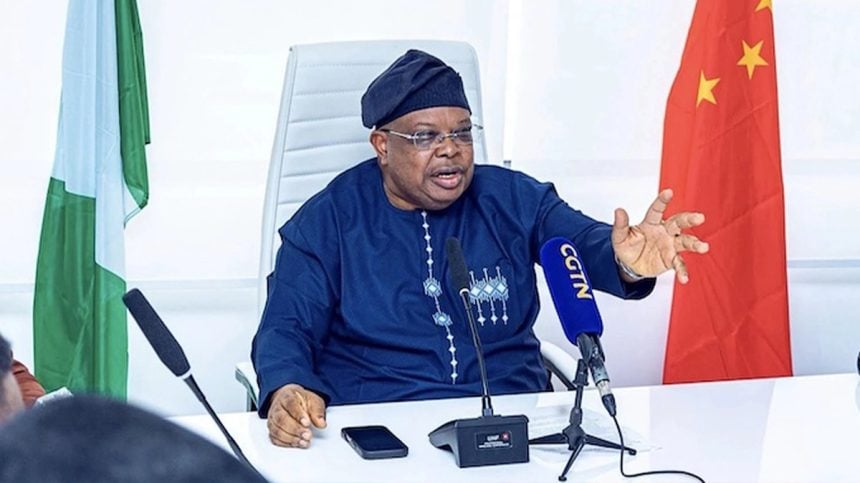

The Federal Government has ruled out plans to increase electricity tariffs, with Minister of Power Joseph Tegbe urging Nigerians to disregard reports suggesting an imminent hike.
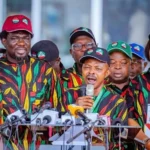
Tegbe gave the assurance on Thursday in Ibadan, Oyo State, during the groundbreaking ceremony for a 17.7-megawatt hybrid solar mini-grid project supported by a 17.74-megawatt-hour Battery Energy Storage System.
“I want to say this clearly and without ambiguity: there is no plan to increase electricity tariffs. What we are planning is a power sector that works round the clock. Our commitment is 24/7 power,” the minister said.
He described reports of a planned tariff increase circulating on social media as misinformation, stressing that the government’s priority was to improve electricity supply and reliability across the country.
FG Targets 24-Hour Power Supply
Tegbe said the government was pursuing an energy strategy built around three major corridors: Lagos-Ogun, Abuja-Kaduna-Kano, and Benin-Enugu-Port Harcourt.
According to him, the plan includes strengthening the national grid and improving generation and transmission infrastructure across the eastern, western and central corridors to support more reliable electricity supply.
He said the government’s goal was to extend dependable electricity to communities nationwide, adding that ongoing reforms were intended to improve the performance of the power sector.
17.7MW Project To Serve Five Oyo Communities
The minister said the interconnected mini-grid project would serve communities across Akinyele, Ido, Ibadan North, Egbeda and Lagelu local government areas of Oyo State.
The project is expected to provide electricity to 22,597 customers across five community clusters: Bola, Jiboye, Molade-Adelubi, Ogo-Oluwa and Sooko-Elega.
Managing Director of the Ibadan Electricity Distribution Company (IBEDC), Deolu Ijose, said the project was developed by Paras Energy and Natural Resources Development Limited.
Read also: NLC Rejects FG’s 2027 Timeline, Demands Wage Talks Now
He explained that the initiative would combine solar photovoltaic generation with battery storage, while IBEDC’s existing distribution infrastructure would be used to deliver electricity to the beneficiary communities.
Ijose said the arrangement demonstrated how distribution companies and private energy developers could collaborate to expand electricity access. He also urged residents to protect the infrastructure.
Projects Spread Across Five LGAs
The Managing Director of the Rural Electrification Agency (REA), Abba Abubakar-Aliyu, listed the project components as 1.8MW in Bola, Akinyele LGA; 3.5MW in Jiboye, Ido LGA; 6.9MW in Molade, Ibadan North LGA; 3.6MW in Ogo-Oluwa, Egbeda LGA; and 1.9MW in Sooko, Lagelu LGA.
The Olubadan of Ibadanland, Oba Rashidi Ladoja, commended the minister for including rural and underserved communities in power-sector interventions.
He urged the Oyo State Government to accelerate work on its ongoing hybrid power project and complete it before 2027 so residents could begin benefiting from more regular electricity supply.
Governor Seyi Makinde, represented by the Commissioner for Energy and Mineral Resources, Dahud Shangodoyin, said the state government would continue pursuing practical electricity projects across Oyo State.
He added that the state’s Hybrid Independent Power Project, designed to serve the state secretariat and other strategic public facilities, has a capacity of 11MW.
Tegbe also acknowledged the contributions of the REA, Paras Energy, the World Bank, IBEDC, the Oyo State Government and traditional leaders to efforts aimed at improving electricity access.