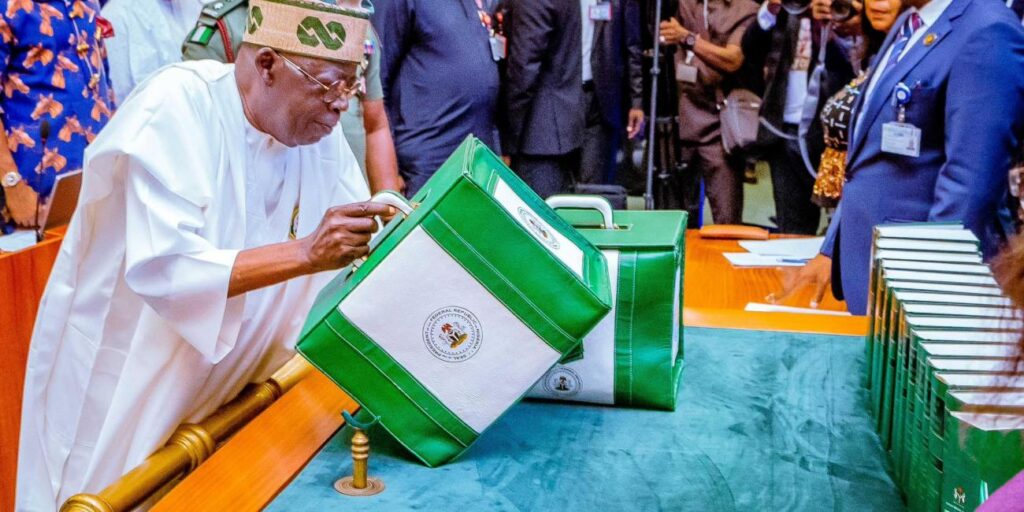

The Federal Government has come under public scrutiny after ₦8.05 billion was earmarked in the 2026 Appropriation Act for the construction, renovation, electrification and equipping of churches and mosques across the country, despite Nigeria’s growing debt burden and widening fiscal deficit.
The allocations, according to report was uncovered by civic technology organisation Tracka, a public accountability platform of BudgIT, show that ₦1.91 billion was budgeted for projects linked to seven churches, while ₦6.14 billion was set aside for 52 mosque-related projects spread across several states.
A review of the budget revealed that many of the religious projects were inserted under ministries and agencies whose statutory mandates are unrelated to religious affairs.
Among the allocations is ₦1 billion under the Industrial Arbitration Panel for the provision and distribution of musical and cultural equipment to churches in Bende Local Government Area of Abia State.
Another ₦1 billion was budgeted through the Energy Commission of Nigeria to provide alternative solar power systems for mosques in Zamfara North Senatorial District.
The budget also includes a combined ₦850 million through the National Agricultural Land Development Authority (NALDA) for the construction of churches and mosques, as well as financial support for religious leaders in Gombe State.
Other allocations include funds for the renovation of central mosques, construction of new worship centres, installation of solar-powered boreholes, mini-grids, streetlights, Imam residences, Islamiyya schools, fencing projects and the supply of carpets in several states, including Kano, Kebbi, Sokoto, Kaduna, Oyo, Taraba, Lagos, Enugu, Jigawa and Bayelsa.
The spending has generated widespread debate as it comes at a time when Nigeria faces a ₦31.45 trillion fiscal deficit, with the government relying heavily on domestic and external borrowing to finance the 2026 budget.
Tracka
Tracka questioned the rationale behind dedicating scarce public resources to religious infrastructure while many communities continue to struggle with poor healthcare, inadequate schools, lack of clean water and deteriorating road infrastructure.
“With increasing debt and limited fiscal space, every naira borrowed and every naira spent should deliver the greatest possible public value,” the organisation stated.
“At a time when many communities still lack functional primary healthcare centres, quality schools, clean water and motorable roads, are these the most pressing priorities for scarce public resources?”
Public concerns
Public policy analysts have also raised concerns over the placement of several religious projects under agencies with unrelated mandates, arguing that such budgeting practices weaken transparency and accountability in public spending.
Critics say assigning church and mosque projects to agencies such as the Industrial Arbitration Panel, Cocoa Research Institute, Energy Commission of Nigeria, Federal Co-operative Colleges and NALDA raises questions about project implementation and oversight.
While acknowledging the important role of religion in Nigerian society, accountability advocates maintain that public funds should prioritise essential services and infrastructure capable of delivering broader economic and social benefits, especially at a time of mounting debt and fiscal constraints.