
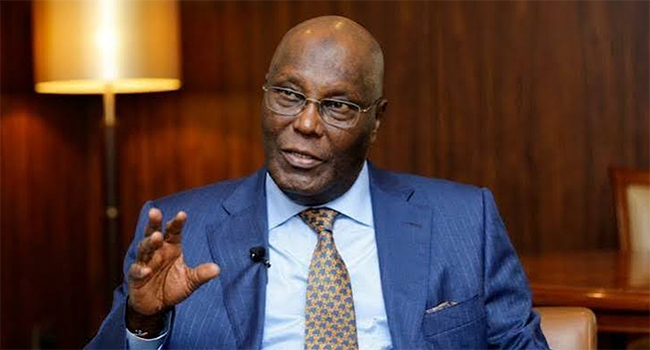

Former Vice President and presidential candidate of the African Democratic Congress (ADC), Atiku Abubakar, has promised to review the Nigerian Education Loan Fund (NELFUND) and write off the debts of qualifying students if elected president.
Atiku’s position was disclosed by his Senior Special Assistant on Public Communication, Phrank Shaibu, in a statement on Tuesday.
Shaibu said Atiku believes Nigerian students should not be forced to begin their working lives burdened by heavy education debts.
Atiku Promises Debt Forgiveness
According to Shaibu, Atiku’s proposed education policy would focus first on reducing the cost of education before reviewing the existing student-loan system.
He said qualifying students could then benefit from debt forgiveness under the proposed reforms.
“His approach will reduce the underlying cost of education and, after review, provide forgiveness for qualifying student debts so that young Nigerians can graduate with hope rather than repayment burdens. Education should open doors, not mortgage the future,” Shaibu said.
‘NELFUND Is Not Proof Education Is Affordable’
The statement was issued in response to a post by President Bola Tinubu on X, where the President defended his economic policies while criticising Atiku’s position without directly naming him.
Shaibu rejected the President’s presentation of NELFUND as evidence that education had become more affordable under the current administration.
He argued that the government had allowed education costs to rise in some institutions before introducing loans for students struggling to cope with increased fees.
“Celebrating NELFUND as proof that education has become affordable under your government is like setting school fees on fire and then boasting that you lent students a bucket of water,” he said.
‘That Is Witchcraft Economics’
Shaibu described the approach as “witchcraft economics”, accusing the government of creating financial pressure for students before offering loans as a solution.
“You make education more expensive, lend students money to survive the increase, and then demand applause for the rescue. That is not affordability. It is witchcraft economics,” he said.
He argued that student loans should not be presented as scholarships or evidence that education is affordable.
According to him, the real measure of an effective education policy is whether Nigerian families can keep their children in school without having to borrow money.
Atiku Rejects Claims Over Energy Plan
Shaibu also accused the Presidency of attempting to frighten students and workers by suggesting that Atiku’s proposed plan to reduce energy costs could affect NELFUND, workers’ salaries or the minimum wage.
“If your government has the arithmetic, Bola, publish it. Show Nigerians, line by line, how a transparently budgeted subsidy tied to Nigerian crude and domestic refining suddenly empties NELFUND or workers’ pay packets,” he demanded.
‘We Will Reduce Energy And Transport Costs’
Shaibu said Atiku’s proposed economic plan would instead focus on reducing energy and transportation costs.
He argued that cheaper energy and transport would allow workers to get more value from their salaries while reducing the financial pressure on students and families.
“Reduce the cost of energy so that salaries buy more. Reduce transport costs so that less of a worker’s wage disappears merely getting to work,” he said.
He added that students should not be pushed into debt because of rising living costs and then made to fear that cheaper fuel would affect their access to education loans.
Atiku’s proposal comes as the debate over the cost of education, student financing and the wider impact of economic reforms continues ahead of the 2027 general elections.