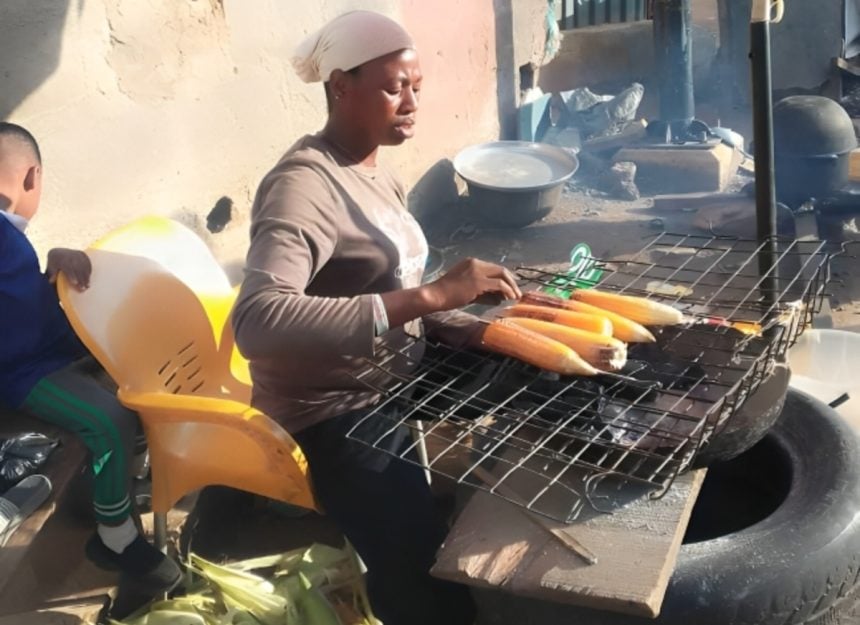

A roasted corn seller in Ibadan, Mrs. Lateef Rukayat has recounted how roasted corn transformed her family’s finances, enabling her to sponsor two of her six children through higher education.
Speaking in an interview with Tribune On The Street, Rukayat said she ventured into the business in January 2021 after her hairdressing salon failed to generate enough income. She revealed that she started with a loan obtained through a local lending scheme known as “Network,” which she used to purchase her first bag of corn.
According to her, the business now generates up to ₦750,000 in monthly sales, although operating costs have risen sharply due to inflation.
She explained that while many people assume roasted corn requires little capital, the reality is different. Expenses such as transportation, charcoal, packaging materials, and fluctuating corn prices have significantly increased the cost of running the business.
“Hairdressing was my first profession and childhood dream, but when the business was no longer profitable, I switched to roasting corn. Today, all six of my children are in school, and two are already in higher institutions,” she said.
Rukayat further stressed that she typically makes between ₦25,000 and ₦27,000 in daily sales from an investment of about ₦20,000, with the proceeds helping her meet household expenses and fund her children’s education.
However, she noted that the business comes with its own challenges, explaining that roasted corn has to be sold fresh because unsold cobs quickly lose their taste and become difficult to sell the following day. She also recounted on how increase in the price of a cob from ₦200 to ₦400 during a period of rising costs result into drop in patronage.
The trader said she has never benefited from any government grant and appealed for financial support and policies that would ease the rising cost of doing business for small-scale entrepreneurs.