
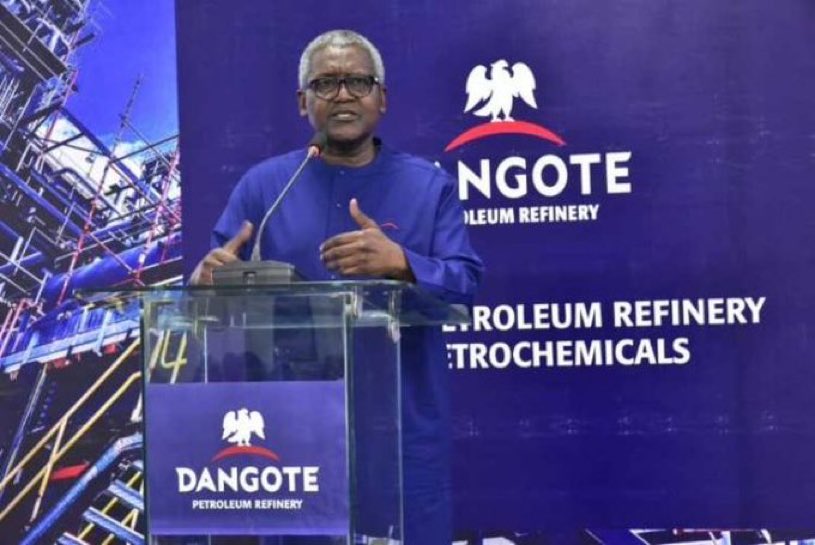

Dangote Refinery has sued Nigeria’s Attorney General of the Federation (AGF) to reverse fuel import licenses issued to the Nigerian National Petroleum Company Limited (NNPC) and other marketers.
Reuters reported that the Refinery filed the lawsuit nearly a year after it previously withdrew a similar one challenging the licenses. At the time, Dangote Refinery strived to overturn import permits issued to the NNPC and other importers.
However, the company is now reportedly asking a Federal High Court in Lagos to nullify the newly renewed licenses. According to the company, the licenses’ renewal constitutes a breach of an order to maintain the existing status quo.
Notably, regulators and marketers argue that imports will enhance supply and prevent shortages.
Meanwhile, Dangote contends that the fuel import licenses undermine its operations and also violate the law. They added that the law only allows imports when domestic supply falls short, which they haven’t failed to do.
Since the refinery commenced operations, Nigerians now rely on the firm’s 650,000 barrels per day production. Despite this, reports suggest that imports have continued to cover supply gaps.
The latest lawsuit however follows the refinery’s recent rejection of an investment expansion offer from NNPC.
Dangote Refinery rejects NNPC’s offer to increase stake
Dangote Group Head Alhaji Aliko Dangote recently revealed that the firm rejected an offer from the NNPC to increase their stake in the refinery.
Dangote explained that the rejection follows the need to allow ordinary Nigerians to own shares in the refinery via an Initial Public Offering (IPO).
The NNPC acquired a 7.25% stake in the refinery for $1 billion in 2021. The deal featured an option to acquire an additional 12.75% to take their shares to 20%.
Commenting on the risks that could threaten the refinery, Dangote highlighted civil war and inconsistent government policies as the biggest.
The other biggest risk is government inconsistencies in policies, and we are addressing that one because if you look at our refinery, the national oil company already owns 7.25 per cent, and they are trying to buy more. We are the ones that said no; we want to now spread it and have everybody be part of it,” he stated.