
UK Prime Minister Keir Starmer has announced his resignation on Monday, June 22, 2026 following internal party issues and declining public support.
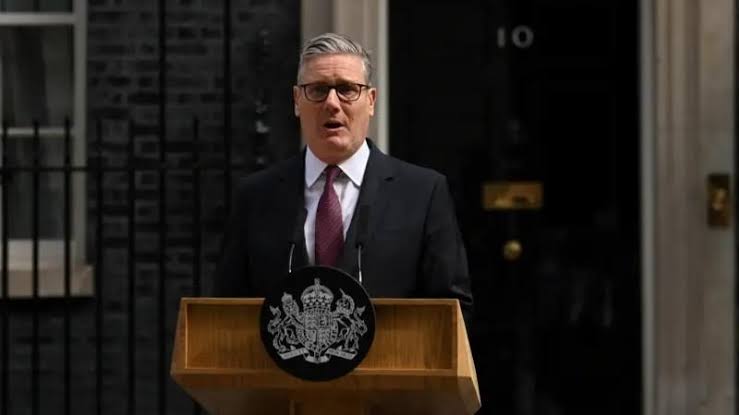
Starmer made the announcement outside 10 Downing Street after less than two years in office. His resignation will also make his role as the Labour Party Leader vacant and open for contest.
Starmer’s resignation follows months of political pressure, collapsing public support, and growing disapproval within his own Labour Party. However, the biggest blow came from his party’s poor performance in the May 2026 local elections.
Specifically, the Labour Party won 1,068 council seats, with a loss of approximately 1,496 seats compared to the previous cycle. This loss positioned Reform UK ad the biggest winner with 1,453 seats to take control of several councils previously held by Labour.
This incident caused MPs across England, Scotland and Wales to question whether Starmer could win the next national election, triggering massive calls for his resignation by dozens of Labour MPs.
Beyond internal party politics, many voters and labour supporters argue that the administration was directionless with frequent policy reversals. They also describe the administration as having weak messaging on topical issues like innigration, energy, and the economy.
While Starmer had previously delayed his resignation, the latest election of Andy Burnham emerged as the final trigger.
Burnham, who won the Makerfield by-election and returning to Parliament is seen as a powerful alternative leader. Many Labour MPs have reportedly backed him to succeed Starmer.
Despite the resignation, Keir Starmer would remain as caretaker PM until Labour chooses a new leader. The leadership contest is expected to begin in July with Andy Burnham seen as the front-runner.
Meanwhile, it is noteworthy that the UK is set to get its seventh Prime Minister in roughly a decade. This signals a major political instability that has characterized British politics since Brexit.